
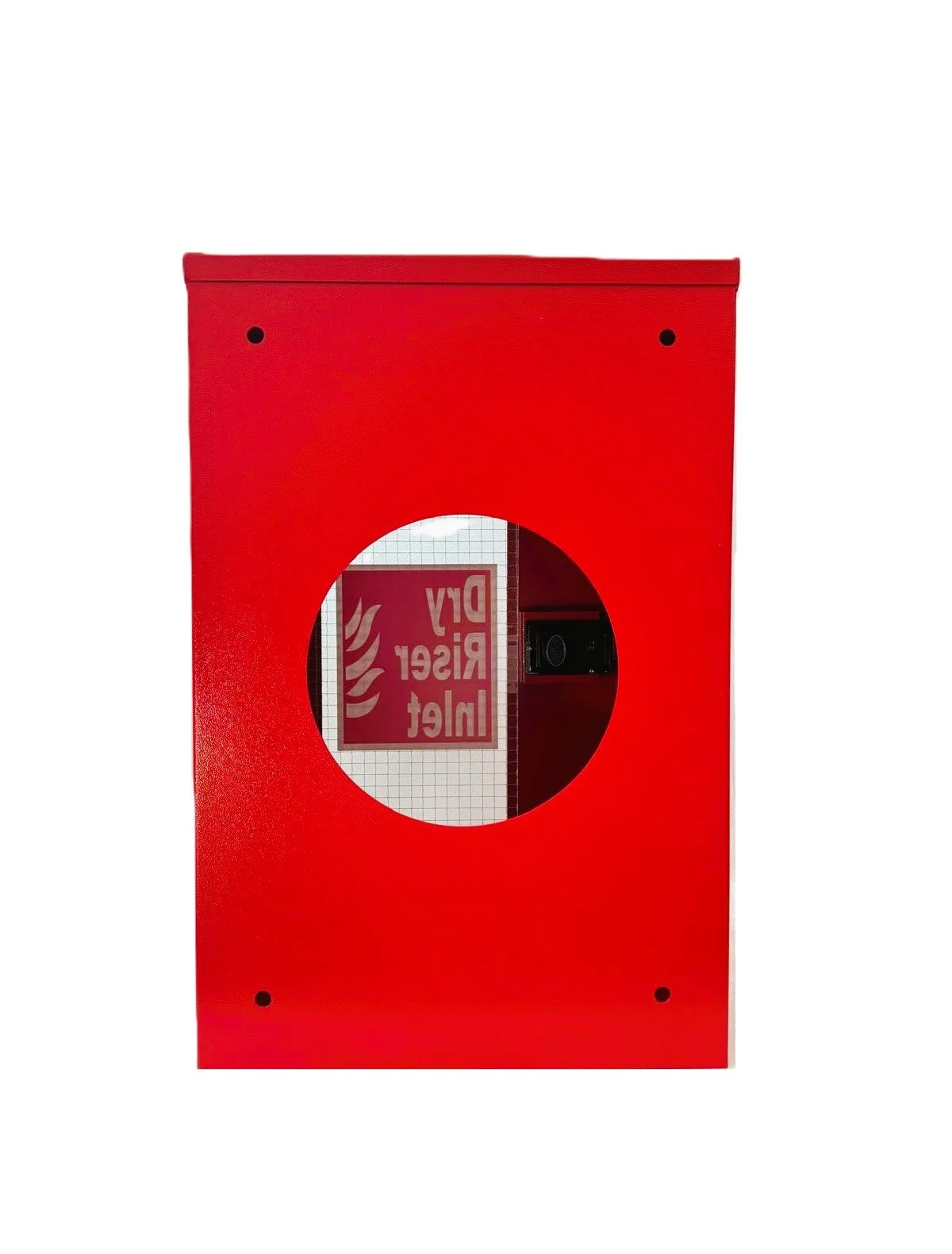
Dry Riser Vertical Surface Mounted Inlet Cabinet
Cabinet Specifications
Cabinet & Door: Carbon Steel / 16swg Zintec Steel
Colour: Red RAL 3002
Glass: 6mm Georgian wired glass
Lock: Slam shut lock, keyed alike / Yale slam lock
Hinge: Stainless steel hinge
Dimensions: 595mm high x 395mm wide x 295mm deep
Installation Type: Surface mounted
Application: Inlet cabinet for dry riser 2-way breeching inlet
Product Use and Protection
The Vertical Surface Mounted Dry Riser Inlet Cabinet is designed to provide easy access to the dry riser inlet valve and breeching inlet connection. It is used where the dry riser inlet needs to be protected but a recessed wall opening is not suitable or practical. The cabinet is supplied with a Georgian wired glass door, helping provide visibility while still protecting the dry riser inlet.
UK Regulations and Standards for Dry Riser Cabinets
In the UK, dry risers are subject to strict fire safety requirements. Failure to comply can lead to legal penalties and may invalidate building insurance.
The Law: The Regulatory Reform (Fire Safety) Order 2005 makes the building’s “Responsible Person” legally accountable for maintaining fire safety systems.
Building Regulations: Approved Document B requires dry risers in buildings where the top floor is between 18m and 50m from ground level. Buildings over 50m generally require wet risers.
The Standard: BS 9990:2015 is the main code of practice covering the design, installation, testing, and maintenance of dry riser systems.
Inlet Positioning: The inlet cabinet and breeching inlet should be positioned as close as possible to the rising main to reduce pressure loss. It should be easily accessible to the attending fire appliance, in unobscured sight of fire crews, and no more than 18-metres from the nearest Fire Bridage access.
Signage: Inlet cabinets should be clearly marked “DRY RISER INLET.”
Installation Guidance
The inlet cabinet should be positioned so it remains clearly visible, accessible, and unobstructed for Fire Brigade use.
As this is a surface mounted cabinet, it should be securely fixed directly to the wall. The cabinet should be installed around the dry riser breeching inlet so that the Fire Brigade can easily access and connect to the inlet during an emergency.
Where the cabinet is installed through or near a fire-rated wall, any gaps around pipe penetrations should be sealed using appropriate fire-stopping material to maintain the wall or compartment’s fire integrity.
Maintenance Requirements
The dry riser system, including the surface mounted inlet cabinet, should be professionally maintained by a competent person.
Six-Monthly Visual Inspection: A competent person must check every cabinet and inlet valve every 6 months. This includes checking the lock, hinge, glass, signage, fixing points, and general condition. The inspection should also look for signs of damage, corrosion, obstruction, tampering, debris, or leaks.
Annual Wet Pressure Test: Once every 12 months, the system should be completely filled with water and pressure tested to ensure it is watertight and capable of withstanding operational pressures.
Please check all products before signing for the materials. We cannot be held responsible for goods after they have been signed for. Due to the specialist nature of dry riser cabinets, these are not always available on our standard next working day service. We will advise the lead time if this is the case.
Delivery to mainland UK only
Cabinet Specifications
Cabinet & Door: Carbon Steel / 16swg Zintec Steel
Colour: Red RAL 3002
Glass: 6mm Georgian wired glass
Lock: Slam shut lock, keyed alike / Yale slam lock
Hinge: Stainless steel hinge
Dimensions: 595mm high x 395mm wide x 295mm deep
Installation Type: Surface mounted
Application: Inlet cabinet for dry riser 2-way breeching inlet
Product Use and Protection
The Vertical Surface Mounted Dry Riser Inlet Cabinet is designed to provide easy access to the dry riser inlet valve and breeching inlet connection. It is used where the dry riser inlet needs to be protected but a recessed wall opening is not suitable or practical. The cabinet is supplied with a Georgian wired glass door, helping provide visibility while still protecting the dry riser inlet.
UK Regulations and Standards for Dry Riser Cabinets
In the UK, dry risers are subject to strict fire safety requirements. Failure to comply can lead to legal penalties and may invalidate building insurance.
The Law: The Regulatory Reform (Fire Safety) Order 2005 makes the building’s “Responsible Person” legally accountable for maintaining fire safety systems.
Building Regulations: Approved Document B requires dry risers in buildings where the top floor is between 18m and 50m from ground level. Buildings over 50m generally require wet risers.
The Standard: BS 9990:2015 is the main code of practice covering the design, installation, testing, and maintenance of dry riser systems.
Inlet Positioning: The inlet cabinet and breeching inlet should be positioned as close as possible to the rising main to reduce pressure loss. It should be easily accessible to the attending fire appliance, in unobscured sight of fire crews, and no more than 18-metres from the nearest Fire Bridage access.
Signage: Inlet cabinets should be clearly marked “DRY RISER INLET.”
Installation Guidance
The inlet cabinet should be positioned so it remains clearly visible, accessible, and unobstructed for Fire Brigade use.
As this is a surface mounted cabinet, it should be securely fixed directly to the wall. The cabinet should be installed around the dry riser breeching inlet so that the Fire Brigade can easily access and connect to the inlet during an emergency.
Where the cabinet is installed through or near a fire-rated wall, any gaps around pipe penetrations should be sealed using appropriate fire-stopping material to maintain the wall or compartment’s fire integrity.
Maintenance Requirements
The dry riser system, including the surface mounted inlet cabinet, should be professionally maintained by a competent person.
Six-Monthly Visual Inspection: A competent person must check every cabinet and inlet valve every 6 months. This includes checking the lock, hinge, glass, signage, fixing points, and general condition. The inspection should also look for signs of damage, corrosion, obstruction, tampering, debris, or leaks.
Annual Wet Pressure Test: Once every 12 months, the system should be completely filled with water and pressure tested to ensure it is watertight and capable of withstanding operational pressures.
Please check all products before signing for the materials. We cannot be held responsible for goods after they have been signed for. Due to the specialist nature of dry riser cabinets, these are not always available on our standard next working day service. We will advise the lead time if this is the case.
Delivery to mainland UK only