
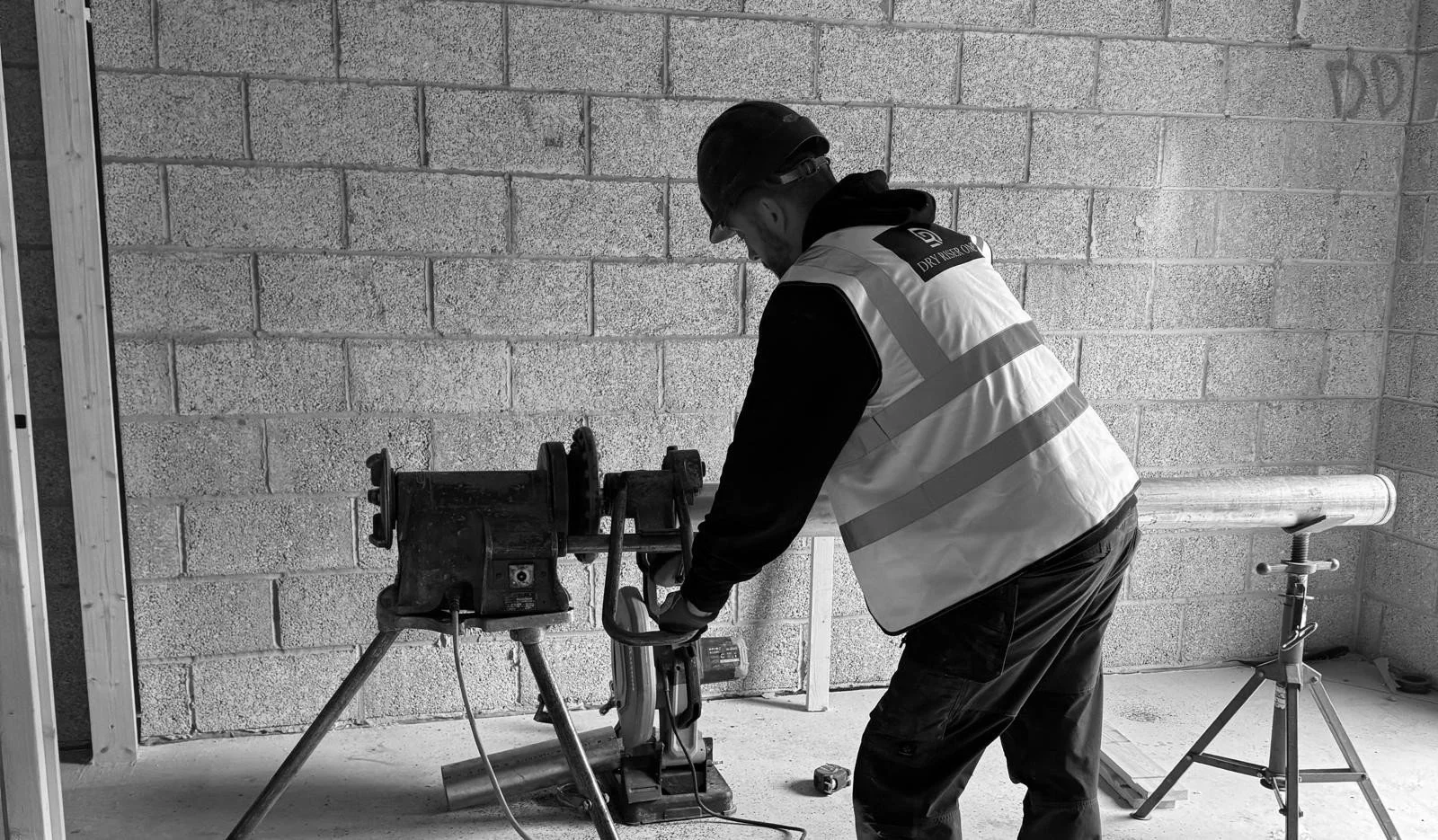
Dry Risers Explained
What You Need to Know.
Dry Riser Systems.
Design, Installation & Maintenance.
Dry Riser One provides dry riser design, installation, commissioning, testing, servicing and remedial works throughout the UK.
From new-build developments and refurbishments to existing systems requiring annual testing or repairs, our team delivers practical dry riser solutions designed around your building, fire strategy and project requirements.
BS 9990:2015 specialists · Nationwide coverage · Fast quotations · Experienced site team
01 / Design
Dry Riser
Design.
System layouts developed around the building, fire strategy, access requirements and relevant standards.
02 / Installation
Dry Riser Installation.
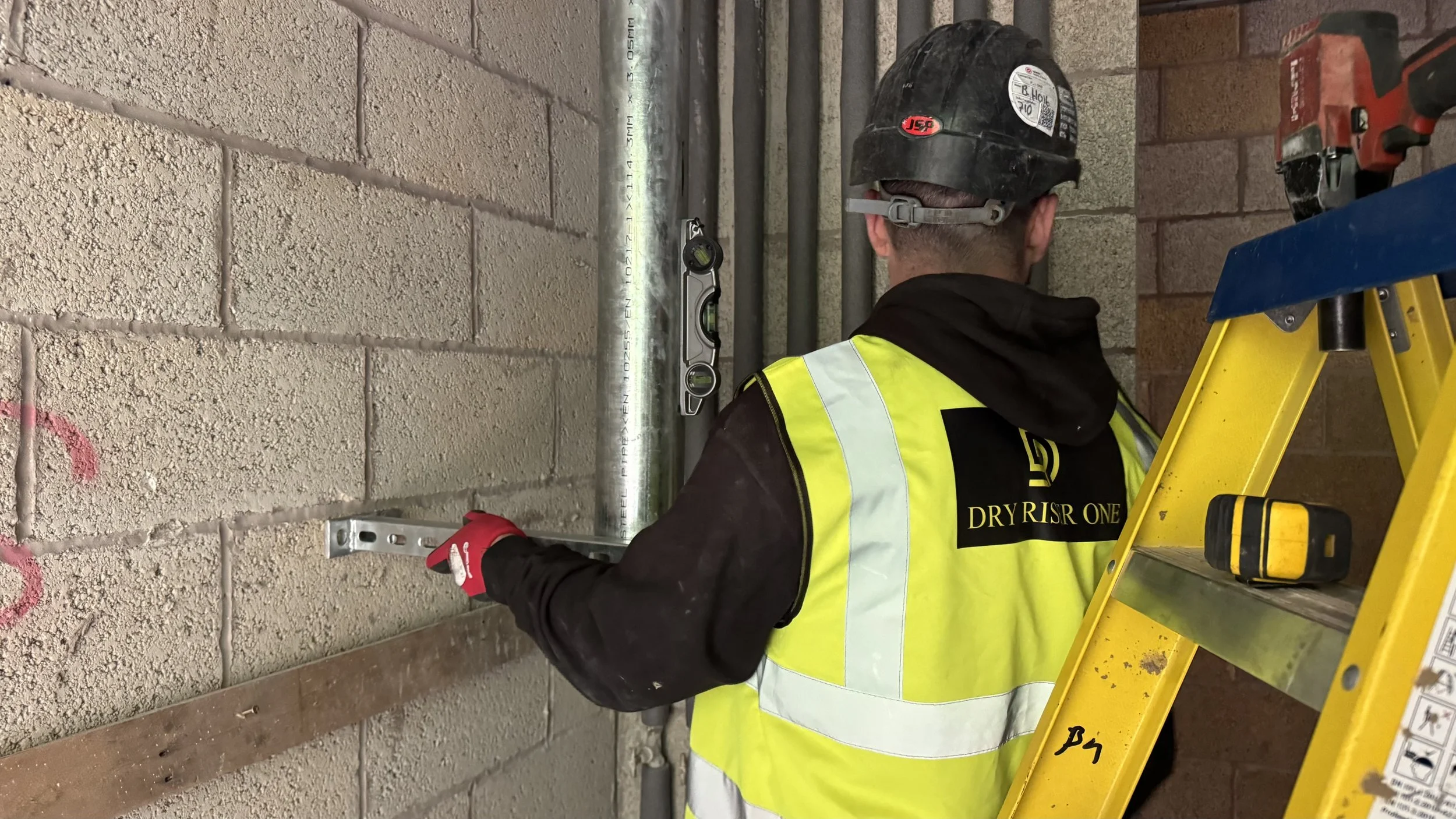
Complete supply and installation for residential, commercial and public-sector developments.
03 / Servicing
Dry Riser Testing & Servicing.
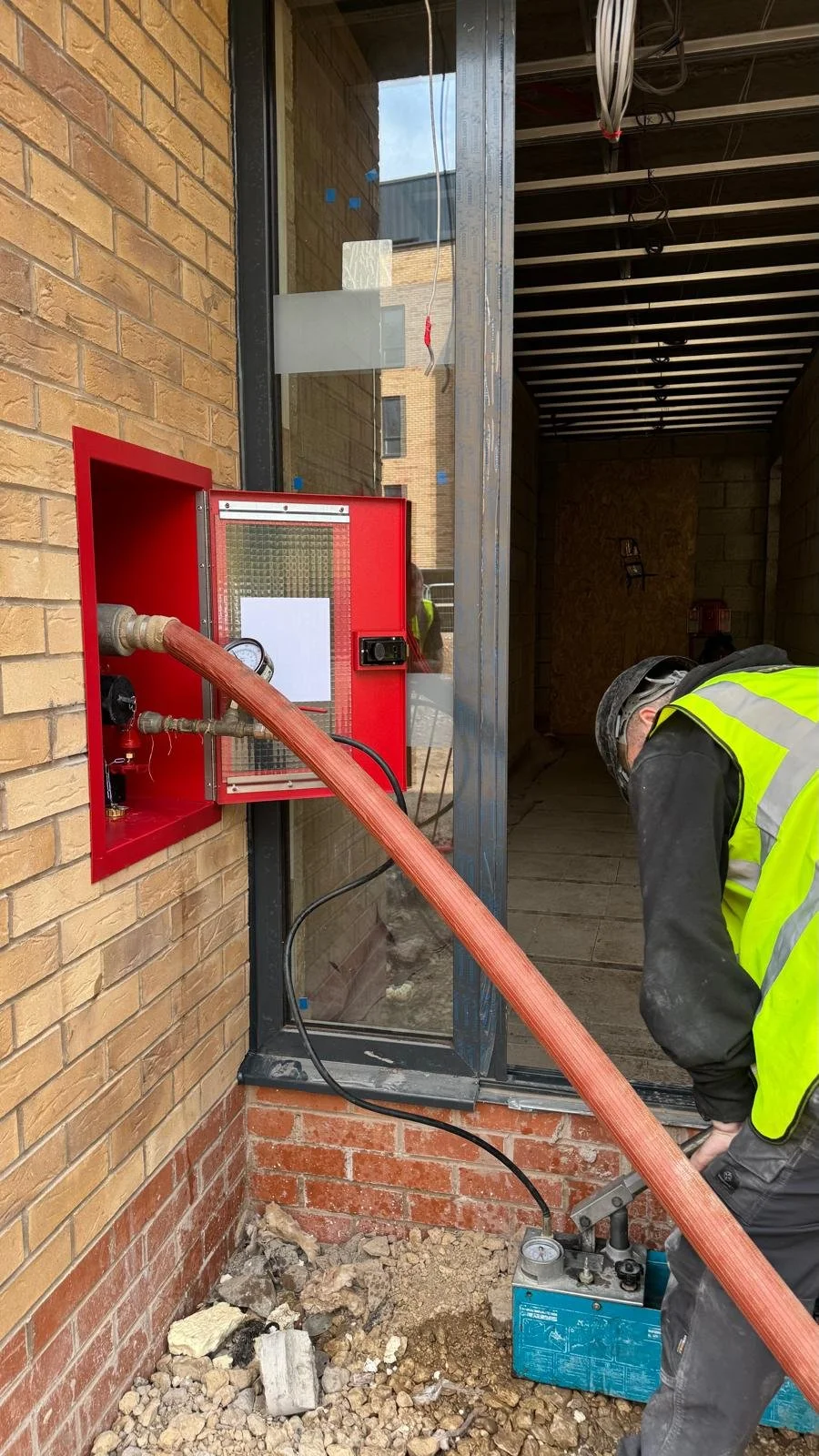
Six-monthly inspections, annual pressure testing, reporting and certification.

04 / Alteration
Dry Riser Repairs & Remedials.
Fault diagnosis, replacement components, alterations and remedial works to existing systems.
When Are Dry Risers Required?
Dry risers are typically required by UK fire safety regulations in tall buildings.
Approved Document B↗︎ (Fire Safety) of the Building Regulations mandates a permanent dry riser system in most buildings over 18 metres tall. Above 50m, however, a wet riser is generally needed because a fire engine’s pump cannot reliably deliver sufficient pressure at that height.
Dry riser installations should be based on the building’s fire strategy and designed and installed in accordance with BS 9990:2015↗︎, the latest British Standard.
What is a Dry Riser?
A dry riser is a system of pipework and valves that allows the Fire Brigade to quickly pump water to upper floors during a fire. They are usually installed in buildings over 18 metres high and remain empty until used by firefighters or during testing and maintenance.
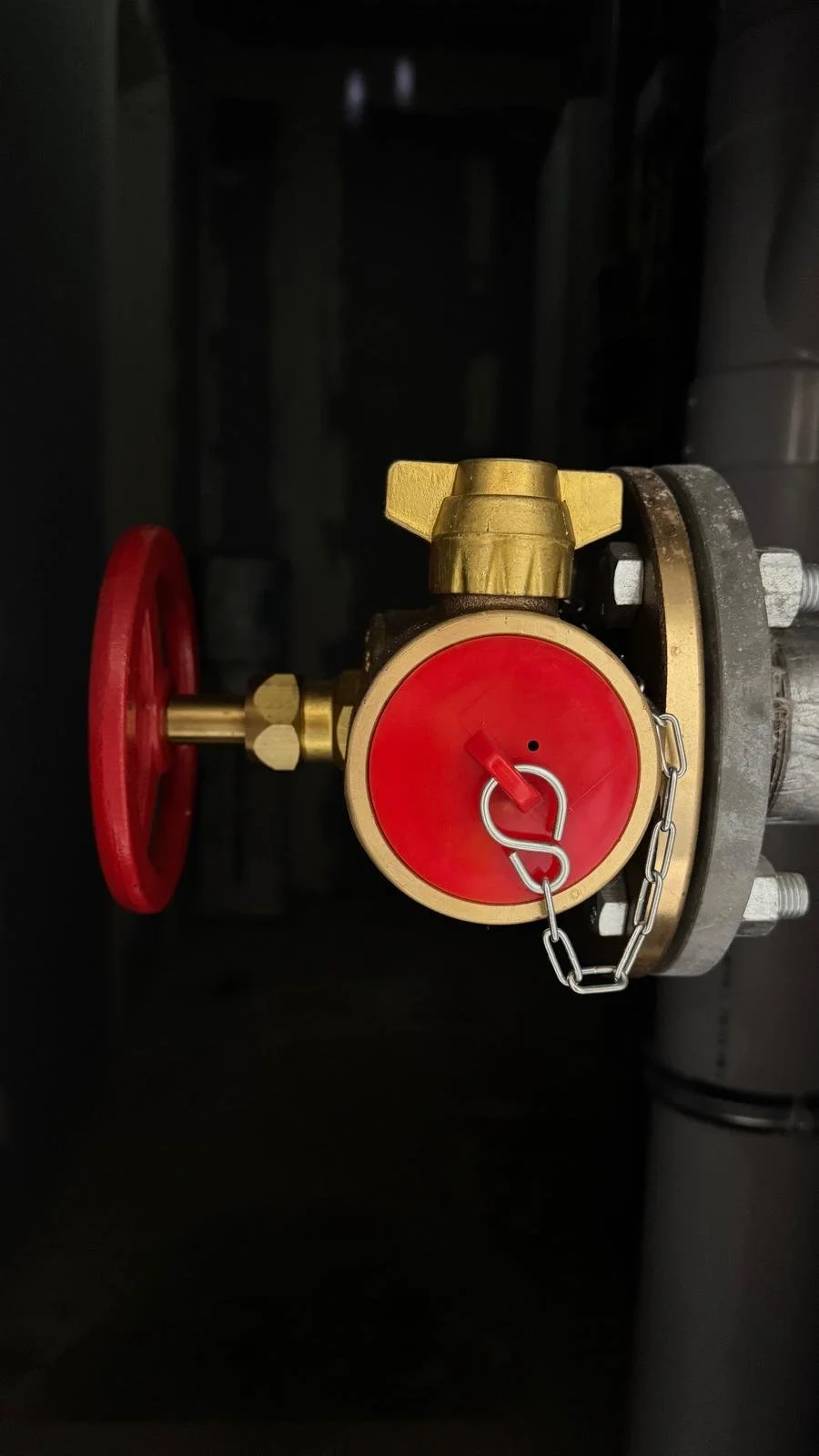
A dry riser typically includes an inlet breeching valve at ground level and landing valves on each floor, usually located within a protected lobby or stairwell.
Dry Riser One Case Studies
-
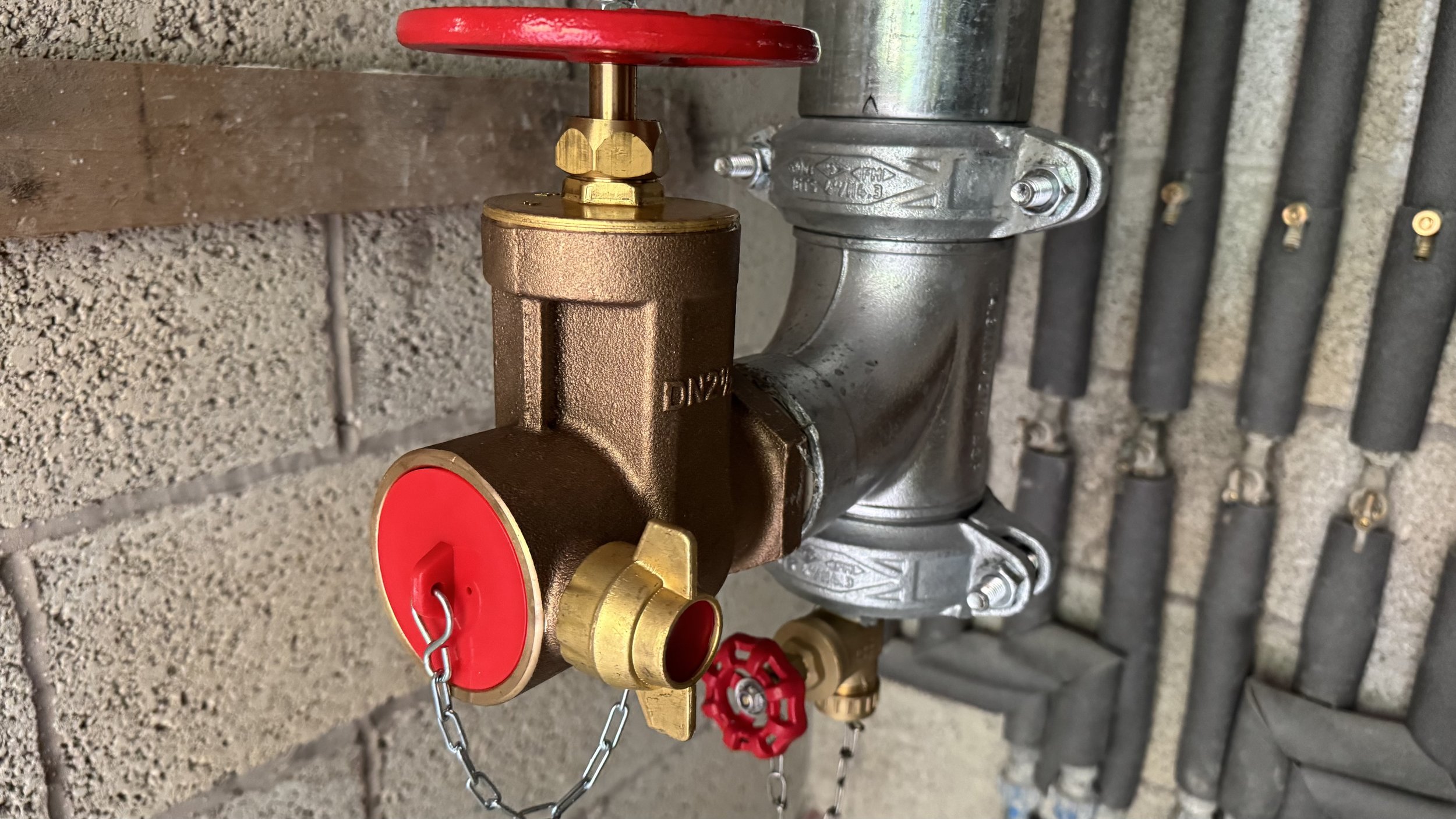
![A fire suppression system valve with a red handle and a red circular cap secured with a chain, attached to a metallic pipe.]()
Dry Riser Servicing Manchester
1 DRY RISER SYSTEM
Dry Riser One Ltd was appointed to carry out dry riser servicing, inspection and pressure testing at Motel One - Royal Exchange, Greater Manchester. -
![A pressure gauge attached to a water pipe, measuring approximately 10 psi, with a red background and a white face, mounted on an industrial or plumbing system, with a wooden surface in the background.]()
Dry Riser Installation London
3 DRY RISER SYSTEMS
We completed a dry riser installation in London for Hatton School and Special Needs Centre’s new Upper School site on Park Avenue in Ilford, IG1. -
![Close-up view of a plumbing system with brass and metal valves and pipes attached to a concrete wall.]()
Dry Riser Installation Mansfield
1 DRY RISER SYSTEM
Dry Riser One Ltd was appointed to supply, install, test and commission a new dry riser system in Mansfield, a residential development located in Nottinghamshire. -
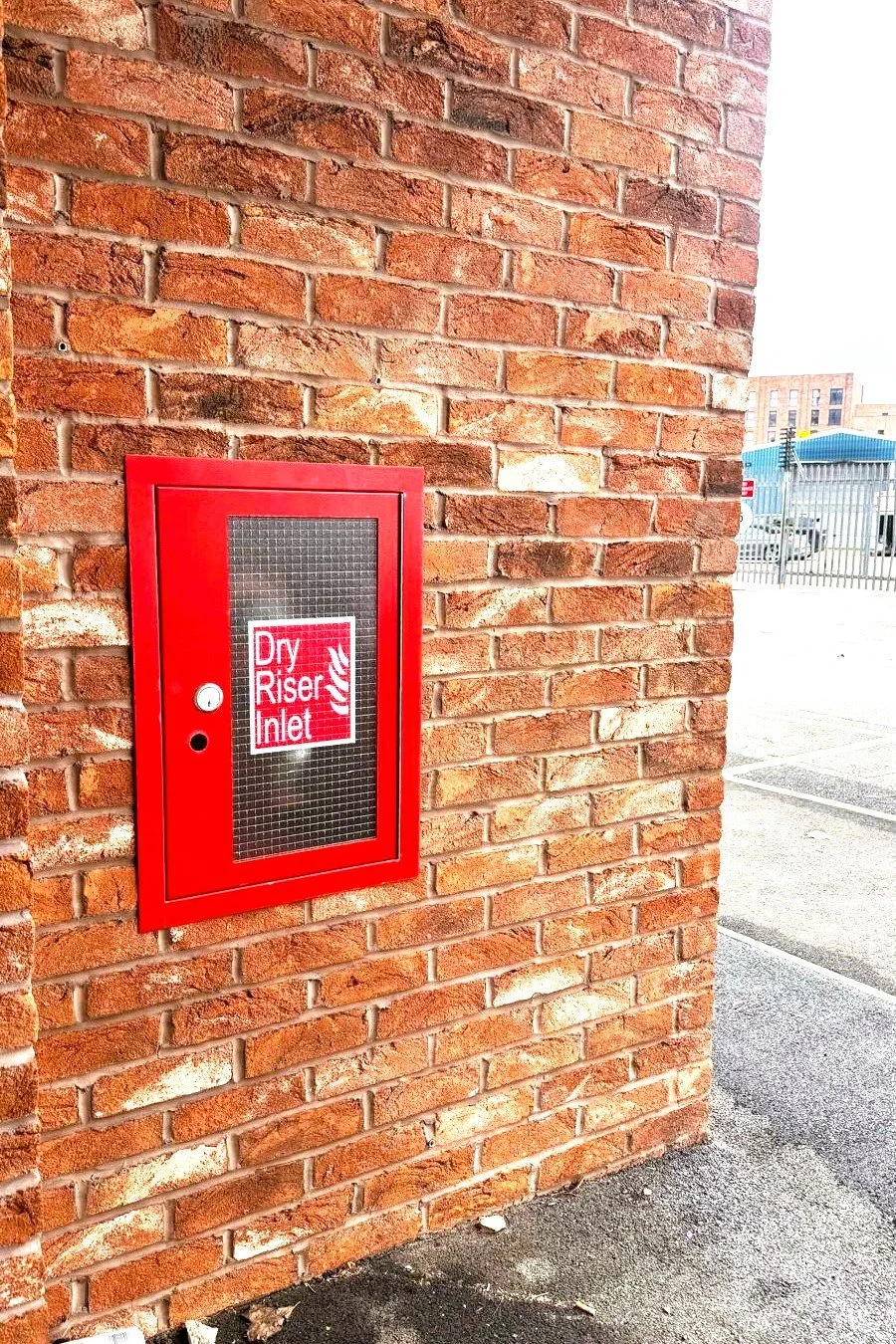
![Red fire safety box labeled 'Dry Riser Inlet' mounted on a brick wall.]()
Dry Riser Installation Stockport
1 DRY RISER SYSTEM
We have successfully completed the installation and commissioning of a new horizontal dry riser system within a commercial property, delivered in line with BS 9990:2015 standard. -
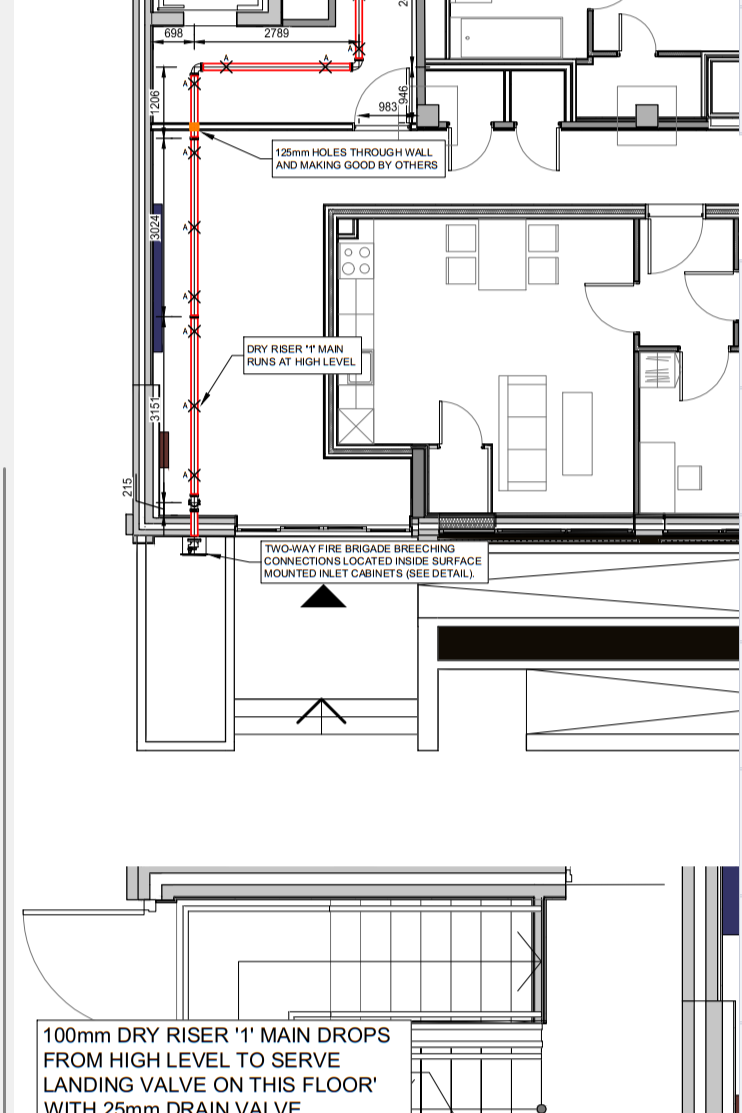
![Architectural floor plan showing plumbing layout, including dry riser, water connections, and wall details.]()
Dry Riser Design Surrey
2 DRY RISER SYSTEMS
Dry Riser Design Approval for a Residential Project in Epsom, Surrey. Project with two dry riser systems.

5-Star Google Rating ( Verify on Google ↗︎)
“Team provided an excellent service from start to finish. Reliable, efficient, highly knowledgeable. Their attention to detail and commitment to safety standards gave us complete confidence”
— Anna Sulihan“Fantastic team to work with. Fast and professional.”
— Carl Maddocks“Professinal,efficient and friendly service. Great to work with”
— Liam F.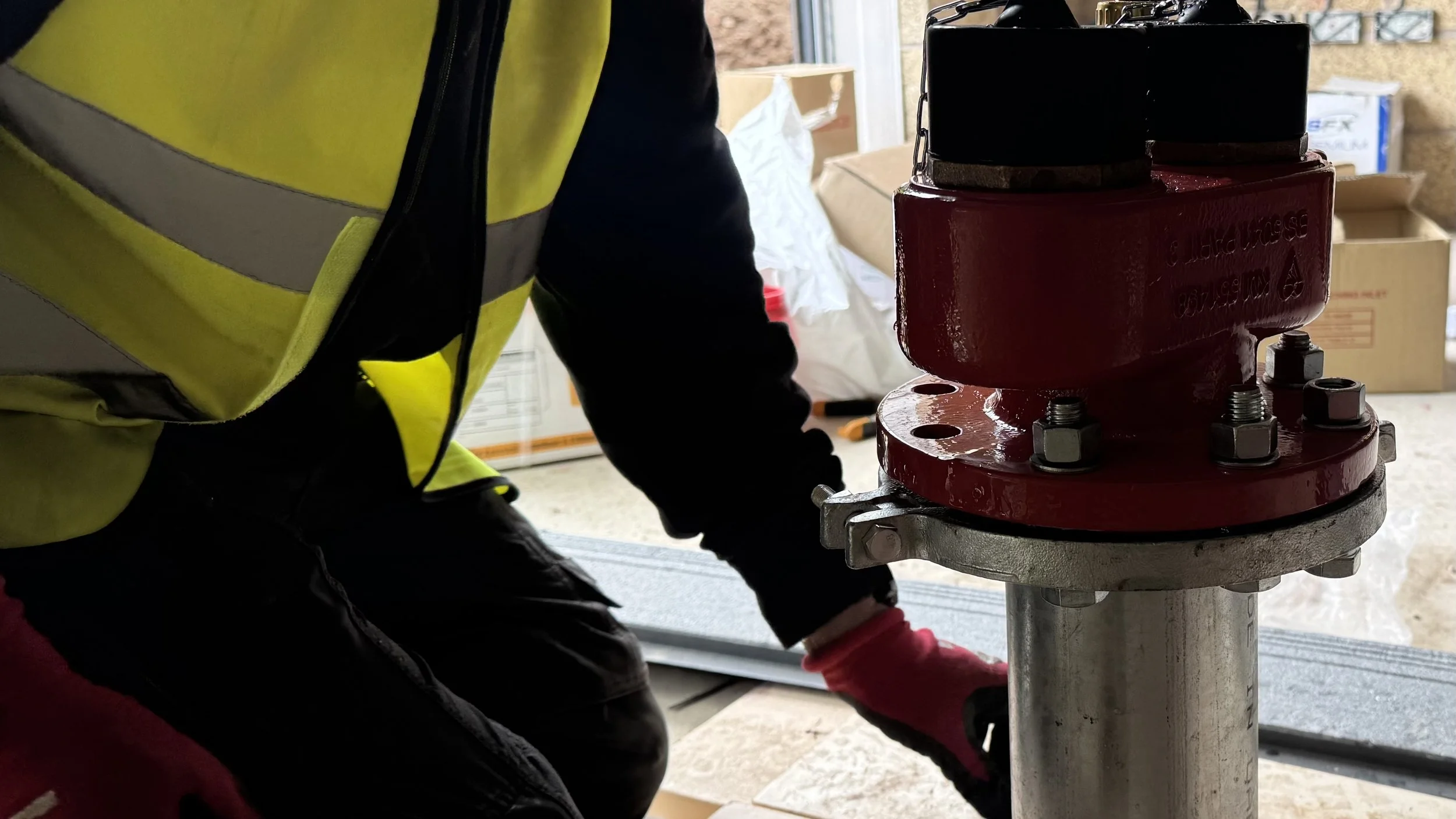
Step-by-Step Process for a Dry Riser System
-
Enquiry and Quotation
We discuss your building’s fire safety needs and review any available plans. Based on this, we provide a detailed quote for design and installation.
-
Site Survey and Design
A qualified engineer or Contracts manager surveys the site, confirming measurements and value of materials. If instructed, we then produce a BS 9990:2015 -compliant design, locating the inlet, pipes and outlets per the fire strategy. This design is submitted to the local Fire Authority for approval as required.
-
Installation and Testing
Our trained engineers fit the system according to the approved design. Once assembled, the dry riser is charged with water and pressurised to 12 bar for at least 15 minutes. We monitor the pressure to verify there are no leaks in the pipework, joints or valves. Any defects found are corrected immediately.
-
Handover and Certification
After a successful test, we hand over the system to you along with full documentation. A Certificate of Compliance is issued, confirming that the installation meets BS 9990:2015 standards. This certificate is valid for 12 months, during which a visual inspection is required at 6 months to ensure continued compliance.
Final Acceptance:
We complete the formal handover by ensuring all job sheets and certifications are signed off and a permanent record of the installation is created. Throughout the dry riser installation, all work is carried out by fully vetted, competent engineers. Each team is led by a supervisor with CSCS and SSSTS certifications, and every engineer holds relevant health & safety qualifications. Our staff undergo annual re-vetting and ongoing training (asbestos awareness, working at height, etc.) to maintain the highest standards.
BS 9990:2015 Compliance: All dry riser installations in the UK must comply with BS 9990:2015 – Code of practice for non-automatic firefighting systems in buildings.
Bespoke Dry Riser Systems: Some buildings have complex layouts or special requirements that call for custom dry riser solutions.
BS 9990:2015–compliant dry riser installation for new builds and existing structures.
Health and Safety Standards at
Dry Riser One Ltd
Dry Riser One Ltd recognises that health and safety does not stand alone. Our Health & Safety Policy links directly with a range of supporting company policies designed to protect people, the public and the environment. These include our Occupational Health Policy, Environmental Policy, Equality and Diversity Policy, Modern Slavery and Human Trafficking Statement, Safeguarding Policy, Drug and Alcohol Policy, Health and Wellbeing Policy, Quality Policy, Anti-Bribery and Anti-Corruption Policy. These policies work together to support safe working practices, ethical behaviour, legal compliance and responsible site operations. All policies are issued to staff and contractors where relevant, are included within our employee documentation and are reviewed at least annually to ensure they remain current, applicable and aligned with our values.
Dry Riser One Ltd is committed to ensuring the health, safety and welfare of all persons affected by our activities, including employees, contractors, clients (Tier 1 contractors) and members of the public.
We recognise our responsibilities under the Health and Safety at Work Act 1974 and all associated legislation, and we will take all reasonably practicable steps to prevent injury, ill health and damage arising from our work activities.
Why Choose
Dry Riser One Ltd?
We are dedicated dry riser specialists with many years of experience. Our expert teams combine technical knowledge with clear communication, guiding you through every step from design to handover. All our installations use high-quality, approved materials and are built to last. Crucially, we ensure every dry riser system is fully compliant.
Fast Response, Fully Certified Engineers, Nationwide UK Coverage, BS 9990:2015 Compliance Specialists.
Dry Riser One Ltd provides professional dry riser installation services for residential, commercial, industrial, healthcare, education, hospitality and public buildings. Our experienced engineers design and install dry riser systems in line with BS 9990:2015 requirements, helping property owners, developers, contractors and facilities managers meet fire safety regulations.
When you work with Dry Riser One, you benefit from a professional service that prioritises safety and reliability. We provide prompt quotes, thorough site surveys and robust designs. Our engineers are CSCS and SSSTS qualified, and we hold all necessary health-and-safety accreditation. The result is a dry riser system that not only meets current regulations but is also easy to maintain and ready to perform in an emergency.
Give us a call on 0800 061 4111 or email our Team at enquiries@dryriserone.co.uk