
FAQs – Dry Risers
Your questions, answered.
Popular Questions
-
What is a dry riser?
A dry riser is a system of vertical pipes fitted in buildings to allow the fire brigade to quickly deliver water to multiple floors during a fire. The pipes remain empty (dry) until connected to a fire engine at ground level.
-
What is the difference between a dry riser and a wet riser?
A dry riser is empty and only filled with water during firefighting operations, while a wet riser is permanently charged with water under pressure, typically used in taller buildings (over 50m in height).
-
Where are dry risers required?
In the UK, dry risers are generally required in buildings where the top floor is between 18m and 50m above fire service vehicle access level, according to Approved Document B of the Building Regulations.
-
How often should a dry riser be tested?
Dry risers must be visually inspected every 6 months and pressure-tested annually in accordance with BS 9990:2015.
-
Who is responsible for maintaining dry risers?
The building owner, manager, or responsible person is legally responsible for ensuring the system is maintained and tested.
-
What does a dry riser test involve?
Annual testing involves connecting a water source, pressurising the system (usually to 12 bar), and checking for leaks, pressure loss, and valve function.
-
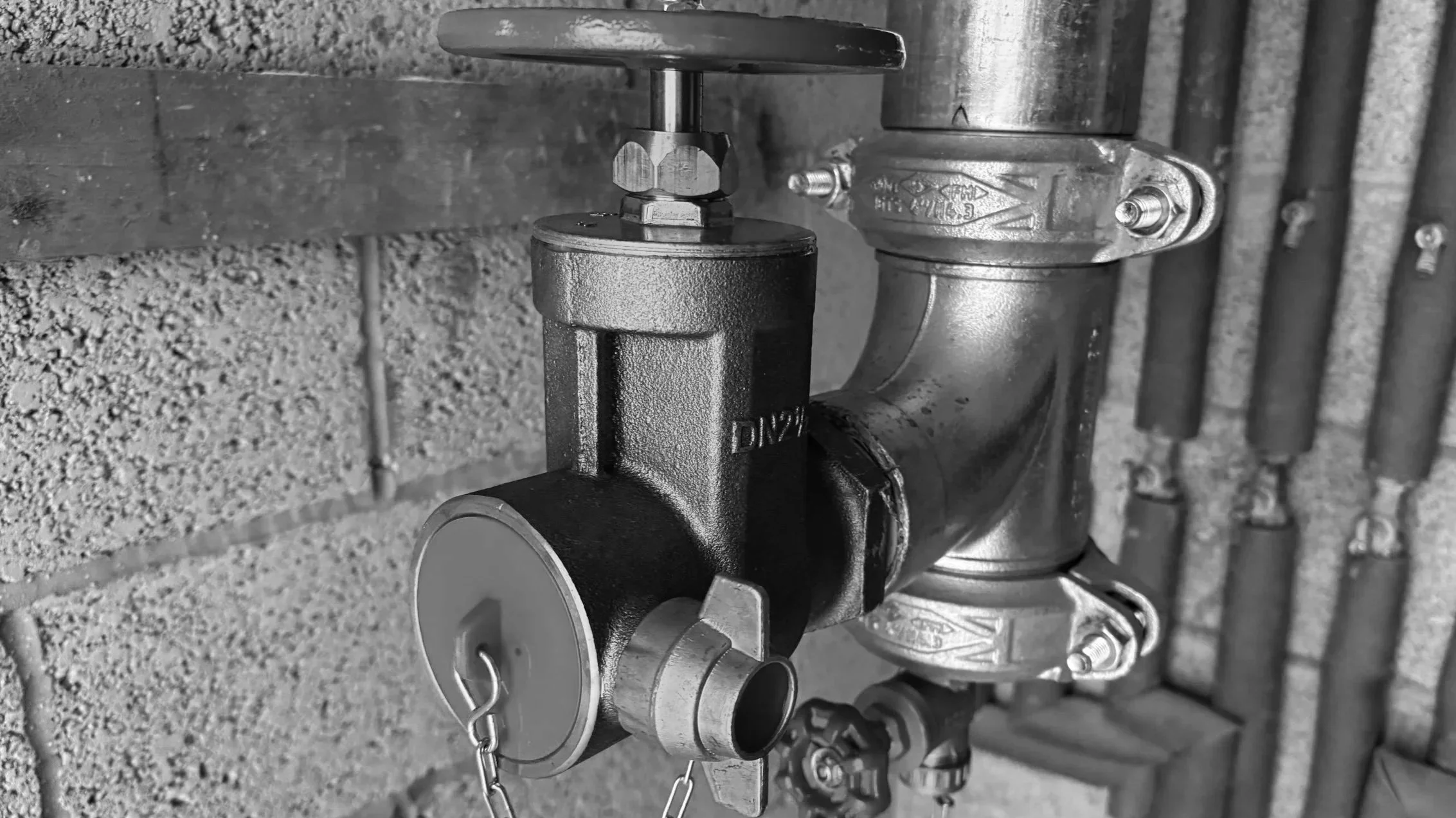
What are landing valves and inlet boxes?
Landing valves are outlets located on each floor, allowing firefighters to connect hoses. The inlet box, usually at ground level, allows fire engines to pump water into the riser.
-
What happens if a dry riser fails inspection?
If defects are found, the system must be repaired immediately. Failure to maintain a working dry riser can lead to prosecution and invalidate building insurance.
-
Can anyone test or maintain a dry riser?
Testing and maintenance must be performed by a competent person with the proper equipment and knowledge of BS 9990 standards.
-
Why are dry risers important for fire safety?
They enable firefighters to deliver water quickly to upper floors without having to run hoses up stairwells, significantly improving response time and safety during a fire.