
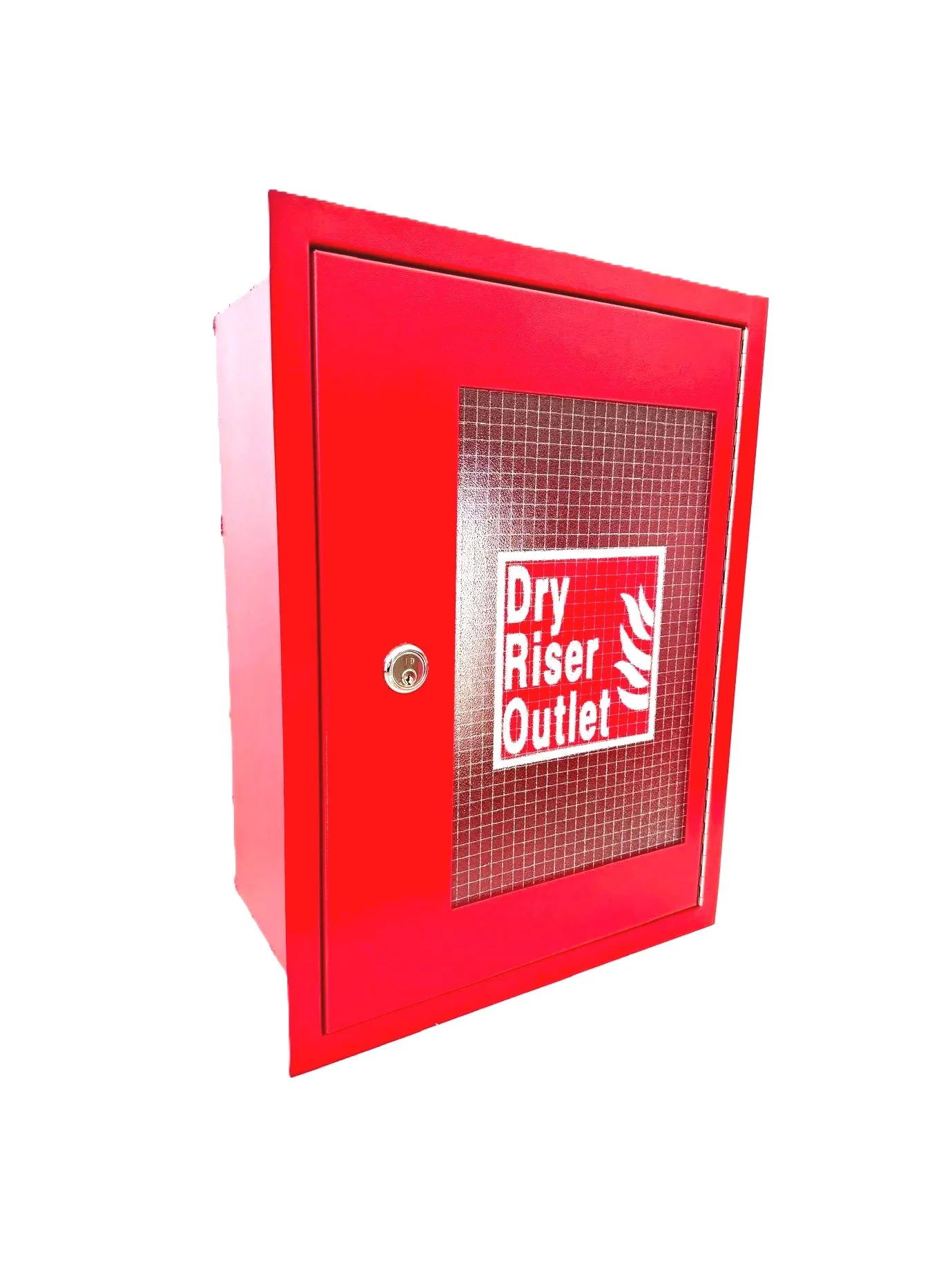
Dry Riser Outlet Cabinet (Vertical Recessed)
Cabinet Specifications
Cabinet & Door: 16swg Zintec Steel
Colour: Red as standard, RAL 3002
Architrave: 30mm wide all round
Glass: 6mm Georgian wired glass with PRV lettering
Lock: Yale slam lock, keyed alike
Hinge: Stainless steel piano hinge
Conforms To: BS 5041 Part 4
Dimensions: 630mm high x 460mm wide x 275mm deep
Weight: Approx. 13kg
Minimum Aperture Required: 470mm wide x 640mm high
The cabinet can be supplied with several options
Full cabinet polyester powder coated to a specified colour. A RAL or BS number is required.
Cabinets can be manufactured to individual specifications and dimensions.
Cabinets can be manufactured to take Fire Brigade budget locks, recommended for solid door versions.
UK Regulations and Standards for Dry Riser Cabinets
In the UK, dry risers are subject to strict fire safety requirements. Failure to comply can lead to legal penalties and may invalidate building insurance.
The Law: The Regulatory Reform (Fire Safety) Order 2005 makes the building’s “Responsible Person” legally accountable for maintaining fire safety systems.
Building Regulations: Approved Document B requires dry risers in buildings where the top floor is between 18m and 50m from ground level. Buildings over 50m generally require wet risers.
The Standard: BS 9990:2015 is the main code of practice covering the design, installation, testing, and maintenance of dry riser systems.
Outlet Positioning: Dry riser outlet valves should be available on each floor above ground level, typically within a protected stairwell, lobby, or other suitable fire-fighting access position.
Signage: Outlet cabinets should be clearly marked “DRY RISER OUTLET.”
Installation Guidance
The outlet cabinet should be positioned so it remains clearly visible, accessible, and unobstructed for Fire Brigade use. It should be securely fixed to the wall substrate, and the wall opening should be correctly sized so the recessed cabinet can sit flush.
For recessed units, the wall opening should allow the cabinet to be securely installed while maintaining a neat finish around the architrave.
If the cabinet is installed in a fire-rated wall, such as a stairwell or protected lobby, any gaps around the cabinet or pipe penetrations must be sealed using appropriate fire-stopping material to maintain the wall’s integrity.
Product Use and Protection
The cabinet protects dry riser outlet valves and couplings from vandalism, accidental damage, debris, and general wear, helping ensure the system remains operational when required.
The Dry Riser Recessed Outlet Cabinet is designed to house the landing valve where firefighters connect their hoses during an emergency. Its recessed design provides a neat, flush finish, making it suitable for stairwells, corridors, protected lobbies, and other internal fire-fighting access areas.
Maintenance Requirements
The dry riser system, including the outlet cabinet, should be professionally maintained by a competent person.
Six-Monthly Visual Inspection: A competent person must check every cabinet and valve every 6 months. This includes checking the locks, hinges, glass, signage, and looking for signs of damage, corrosion, obstruction, tampering, or leaks.
Annual Wet Pressure Test: Once every 12 months, the system should be completely filled with water and pressure tested to ensure it is watertight and capable of withstanding operational pressures.
A full logbook of all inspections, tests, and remedial work should be kept.
This product contains glass with sharp edges. Please handle with care. Please check all products before signing for the materials. We cannot be held responsible for goods after they have been signed for.
Delivery to mainland UK only
Cabinet Specifications
Cabinet & Door: 16swg Zintec Steel
Colour: Red as standard, RAL 3002
Architrave: 30mm wide all round
Glass: 6mm Georgian wired glass with PRV lettering
Lock: Yale slam lock, keyed alike
Hinge: Stainless steel piano hinge
Conforms To: BS 5041 Part 4
Dimensions: 630mm high x 460mm wide x 275mm deep
Weight: Approx. 13kg
Minimum Aperture Required: 470mm wide x 640mm high
The cabinet can be supplied with several options
Full cabinet polyester powder coated to a specified colour. A RAL or BS number is required.
Cabinets can be manufactured to individual specifications and dimensions.
Cabinets can be manufactured to take Fire Brigade budget locks, recommended for solid door versions.
UK Regulations and Standards for Dry Riser Cabinets
In the UK, dry risers are subject to strict fire safety requirements. Failure to comply can lead to legal penalties and may invalidate building insurance.
The Law: The Regulatory Reform (Fire Safety) Order 2005 makes the building’s “Responsible Person” legally accountable for maintaining fire safety systems.
Building Regulations: Approved Document B requires dry risers in buildings where the top floor is between 18m and 50m from ground level. Buildings over 50m generally require wet risers.
The Standard: BS 9990:2015 is the main code of practice covering the design, installation, testing, and maintenance of dry riser systems.
Outlet Positioning: Dry riser outlet valves should be available on each floor above ground level, typically within a protected stairwell, lobby, or other suitable fire-fighting access position.
Signage: Outlet cabinets should be clearly marked “DRY RISER OUTLET.”
Installation Guidance
The outlet cabinet should be positioned so it remains clearly visible, accessible, and unobstructed for Fire Brigade use. It should be securely fixed to the wall substrate, and the wall opening should be correctly sized so the recessed cabinet can sit flush.
For recessed units, the wall opening should allow the cabinet to be securely installed while maintaining a neat finish around the architrave.
If the cabinet is installed in a fire-rated wall, such as a stairwell or protected lobby, any gaps around the cabinet or pipe penetrations must be sealed using appropriate fire-stopping material to maintain the wall’s integrity.
Product Use and Protection
The cabinet protects dry riser outlet valves and couplings from vandalism, accidental damage, debris, and general wear, helping ensure the system remains operational when required.
The Dry Riser Recessed Outlet Cabinet is designed to house the landing valve where firefighters connect their hoses during an emergency. Its recessed design provides a neat, flush finish, making it suitable for stairwells, corridors, protected lobbies, and other internal fire-fighting access areas.
Maintenance Requirements
The dry riser system, including the outlet cabinet, should be professionally maintained by a competent person.
Six-Monthly Visual Inspection: A competent person must check every cabinet and valve every 6 months. This includes checking the locks, hinges, glass, signage, and looking for signs of damage, corrosion, obstruction, tampering, or leaks.
Annual Wet Pressure Test: Once every 12 months, the system should be completely filled with water and pressure tested to ensure it is watertight and capable of withstanding operational pressures.
A full logbook of all inspections, tests, and remedial work should be kept.
This product contains glass with sharp edges. Please handle with care. Please check all products before signing for the materials. We cannot be held responsible for goods after they have been signed for.
Delivery to mainland UK only