
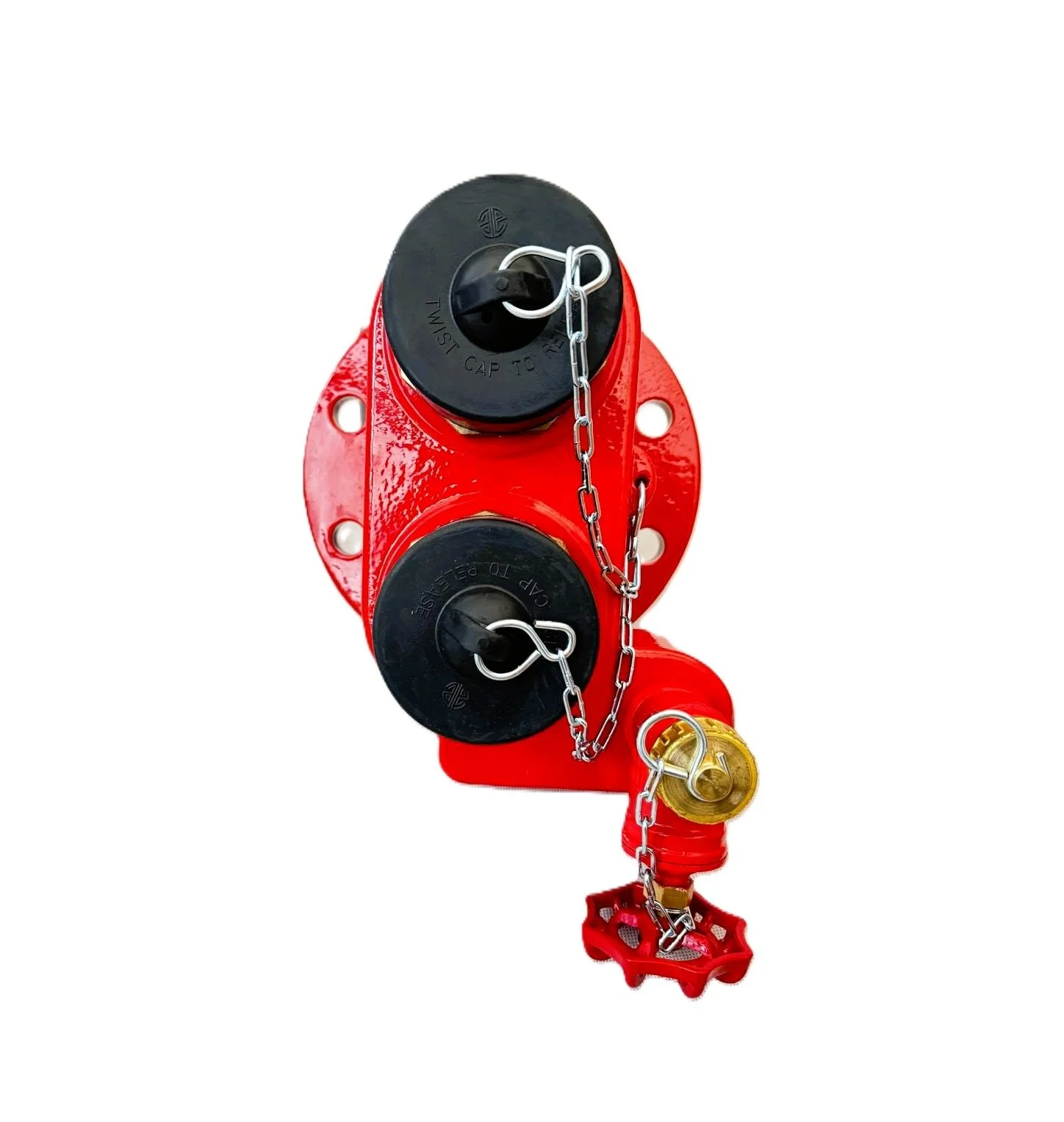
2 - Way Dry Riser Inlet Valve
Product Specifications
Product Type: 2-way dry riser inlet breeching valve
Connection Type: Flanged
Flange Size: 100mm PN16
Application: Dry riser inlet connection
Approx. Weight: 13kg
Inlet Blank Caps: Rubber blank caps with chrome chains
Finish: Red body finish
Non-Return Valves: Fitted to prevent backflow from the system
Pressure Testing: Hydrostatically tested on the body and inlets
Standard: Manufactured in accordance with BS 5041 Part 3: 1975
Product Use and Protection
The 2-way dry riser breeching inlet is used to provide a connection point for the Fire Brigade to pump water into a dry riser system. During normal conditions, a dry riser pipework system remains empty. In an emergency, firefighters connect hoses to the inlet breeching valve and charge the dry riser with water, allowing crews to access water from outlet valves on upper floors.
Materials and Construction
The product sheet states that the breeching inlet body is cast from spheroidal graphite iron. The inlets are made from BS1400 LG2 gunmetal and copper alloy parts, with bronze spring, stainless steel locknut, washer, and related internal components.
The inlet components are individually hydrostatically tested, and the non-return valves are tested to ensure no leaks are evident under the required low-pressure test conditions.
UK Regulations and Standards for Dry Riser Breeching Inlets
In the UK, dry riser systems must be correctly designed, installed, inspected, tested, and maintained to ensure they are ready for Fire Brigade use.
The Law: The Regulatory Reform (Fire Safety) Order 2005 makes the building’s “Responsible Person” legally accountable for maintaining fire safety systems.
Building Regulations: Approved Document B requires dry risers in buildings where the top floor is between 18m and 50m from ground level. Buildings over 50m generally require wet risers.
Product Standard: The attached product sheet states that the 2-way inlet breeching valve is manufactured in accordance with BS 5041 Part 3: 1975.
System Standard: BS 9990:2015 is commonly used as the code of practice for the design, installation, testing, and maintenance of dry riser systems.
Inlet Positioning: Dry riser inlet breeching valves should be located in an accessible position for the Fire Brigade, normally at ground level and within a suitable dry riser inlet cabinet.
Signage: The inlet cabinet should be clearly marked “DRY RISER INLET.”
Installation Guidance
The 100mm PN16 flanged connection should be correctly aligned with the dry riser pipework and securely fixed using suitable flange bolts, gaskets, and approved installation methods. The inlet should be positioned inside a suitable dry riser inlet cabinet so that both inlet connections remain clearly visible, accessible, and unobstructed for Fire Brigade use. The surrounding area should be kept clear at all times. Fire crews must be able to open the cabinet, remove the blank caps, and connect hoses without obstruction. Where the inlet pipework passes through a fire-rated wall or compartment, appropriate fire-stopping materials should be used to maintain fire integrity.
Maintenance Requirements
Six-Monthly Visual Inspection: The inlet valve, blank caps, chains, cabinet, signage, flange connection, and surrounding area should be checked every 6 months. The inspection should look for damage, corrosion, obstruction, tampering, missing caps, leaks, or signs of wear.
Annual Wet Pressure Test: Once every 12 months, the dry riser system should be filled with water and pressure tested to confirm it is watertight and capable of withstanding operational pressures.
A full logbook should be kept for all inspections, tests, repairs, and remedial works.
This product should be installed and maintained by a competent person as part of a compliant dry riser system.
Please check all products before signing for the materials. We cannot be held responsible for goods after they have been signed for.
Due to the specialist nature of dry riser breeching inlets, this product may not always be available on a standard next working day service. Lead time will be advised where applicable.
Delivery to mainland UK only.
Product Specifications
Product Type: 2-way dry riser inlet breeching valve
Connection Type: Flanged
Flange Size: 100mm PN16
Application: Dry riser inlet connection
Approx. Weight: 13kg
Inlet Blank Caps: Rubber blank caps with chrome chains
Finish: Red body finish
Non-Return Valves: Fitted to prevent backflow from the system
Pressure Testing: Hydrostatically tested on the body and inlets
Standard: Manufactured in accordance with BS 5041 Part 3: 1975
Product Use and Protection
The 2-way dry riser breeching inlet is used to provide a connection point for the Fire Brigade to pump water into a dry riser system. During normal conditions, a dry riser pipework system remains empty. In an emergency, firefighters connect hoses to the inlet breeching valve and charge the dry riser with water, allowing crews to access water from outlet valves on upper floors.
Materials and Construction
The product sheet states that the breeching inlet body is cast from spheroidal graphite iron. The inlets are made from BS1400 LG2 gunmetal and copper alloy parts, with bronze spring, stainless steel locknut, washer, and related internal components.
The inlet components are individually hydrostatically tested, and the non-return valves are tested to ensure no leaks are evident under the required low-pressure test conditions.
UK Regulations and Standards for Dry Riser Breeching Inlets
In the UK, dry riser systems must be correctly designed, installed, inspected, tested, and maintained to ensure they are ready for Fire Brigade use.
The Law: The Regulatory Reform (Fire Safety) Order 2005 makes the building’s “Responsible Person” legally accountable for maintaining fire safety systems.
Building Regulations: Approved Document B requires dry risers in buildings where the top floor is between 18m and 50m from ground level. Buildings over 50m generally require wet risers.
Product Standard: The attached product sheet states that the 2-way inlet breeching valve is manufactured in accordance with BS 5041 Part 3: 1975.
System Standard: BS 9990:2015 is commonly used as the code of practice for the design, installation, testing, and maintenance of dry riser systems.
Inlet Positioning: Dry riser inlet breeching valves should be located in an accessible position for the Fire Brigade, normally at ground level and within a suitable dry riser inlet cabinet.
Signage: The inlet cabinet should be clearly marked “DRY RISER INLET.”
Installation Guidance
The 100mm PN16 flanged connection should be correctly aligned with the dry riser pipework and securely fixed using suitable flange bolts, gaskets, and approved installation methods. The inlet should be positioned inside a suitable dry riser inlet cabinet so that both inlet connections remain clearly visible, accessible, and unobstructed for Fire Brigade use. The surrounding area should be kept clear at all times. Fire crews must be able to open the cabinet, remove the blank caps, and connect hoses without obstruction. Where the inlet pipework passes through a fire-rated wall or compartment, appropriate fire-stopping materials should be used to maintain fire integrity.
Maintenance Requirements
Six-Monthly Visual Inspection: The inlet valve, blank caps, chains, cabinet, signage, flange connection, and surrounding area should be checked every 6 months. The inspection should look for damage, corrosion, obstruction, tampering, missing caps, leaks, or signs of wear.
Annual Wet Pressure Test: Once every 12 months, the dry riser system should be filled with water and pressure tested to confirm it is watertight and capable of withstanding operational pressures.
A full logbook should be kept for all inspections, tests, repairs, and remedial works.
This product should be installed and maintained by a competent person as part of a compliant dry riser system.
Please check all products before signing for the materials. We cannot be held responsible for goods after they have been signed for.
Due to the specialist nature of dry riser breeching inlets, this product may not always be available on a standard next working day service. Lead time will be advised where applicable.
Delivery to mainland UK only.