
Stainless Steel Vertical Inlet Cabinets for Dry Riser Systems
Stainless steel vertical inlet cabinets are part of modern dry riser installation projects, ensuring safe, secure, and efficient access for firefighters during emergencies. Installed externally or within building façades, these cabinets house the inlet breeching valve, allowing fire and rescue services to quickly connect a water supply to the system.
A dry riser installation is typically required in buildings between 18 and 50 metres in height, where firefighting from ground level becomes impractical. In these systems, water is pumped into the pipework through an external inlet. Vertical inlet cabinets play a role in protecting this connection point while ensuring it remains clearly visible and easily accessible as part of a compliant dry riser installation.
Design and Construction in Dry Riser Installation
Vertical inlet cabinets used in dry riser installations are commonly recessed into the wall, providing both protection and a clean architectural finish. Each cabinet incorporates a surrounding flange, typically around 38mm, which allows for secure fixing into masonry or structural openings while maintaining a neat finish with the building façade.
Cabinets are available in high-visibility finishes such as red (RAL 3002) or in stainless steel for projects where durability and aesthetics are equally important. Stainless steel vertical inlet cabinets are particularly suited to external dry riser installation environments and high-specification developments, offering excellent resistance to corrosion, weathering, and impact.
Key Features and Benefits
Stainless steel cabinets used in dry riser installations are designed with both functionality and longevity in mind. Many units include a wired Georgian glass door, allowing fire crews to visually confirm the presence and condition of the inlet connection before opening. This improves efficiency during emergency response.
Additional features include:
Slam-shut locking mechanisms for secure access
Stainless steel piano hinges for durability and smooth operation
Corrosion-resistant materials for long-term performance
These features ensure that the cabinet remains reliable and operational throughout the lifecycle of the dry riser system.
Positioning in Dry Riser Installations
Correct positioning is essential in any dry riser installation. The inlet cabinet and breeching inlet should be located as close as possible to the rising main to minimise pressure loss and ensure effective water delivery to upper levels.
To comply with BS 9990:2015, dry riser installations must ensure that the inlet cabinet is:
Clearly visible and unobstructed
Easily accessible to fire service vehicles
Positioned no more than 18 metres from the nearest vehicular access point
Poor breeching inlet positioning can lead to delayed response times and reduced firefighting effectiveness. Early coordination between architects, fire engineers, and dry riser specialists is therefore important.
Maintenance and Compliance
Ongoing maintenance is a key part of any dry riser system. Regular inspections should be carried out to check for corrosion, damage, and correct operation of all components, including valves, doors, and hinges.
Compliance with British Standards, particularly BS 9990:2015, is essential for all dry riser installation and servicing work. Proper installation, testing, and servicing ensure the system performs reliably in an emergency.
Have more Questions?
Should you have any queries regarding your system, our team remains readily available to provide clear and professional guidance, whether through our Contracts Manager or one of our qualified engineers. All advice is delivered in full accordance with BS 9990:2015. For further assistance, please contact us on +44 (0) 800 061 4111.
Our objective is to promote awareness and support communities nationwide in maintaining safe living environments, including newly developed properties approaching occupancy.
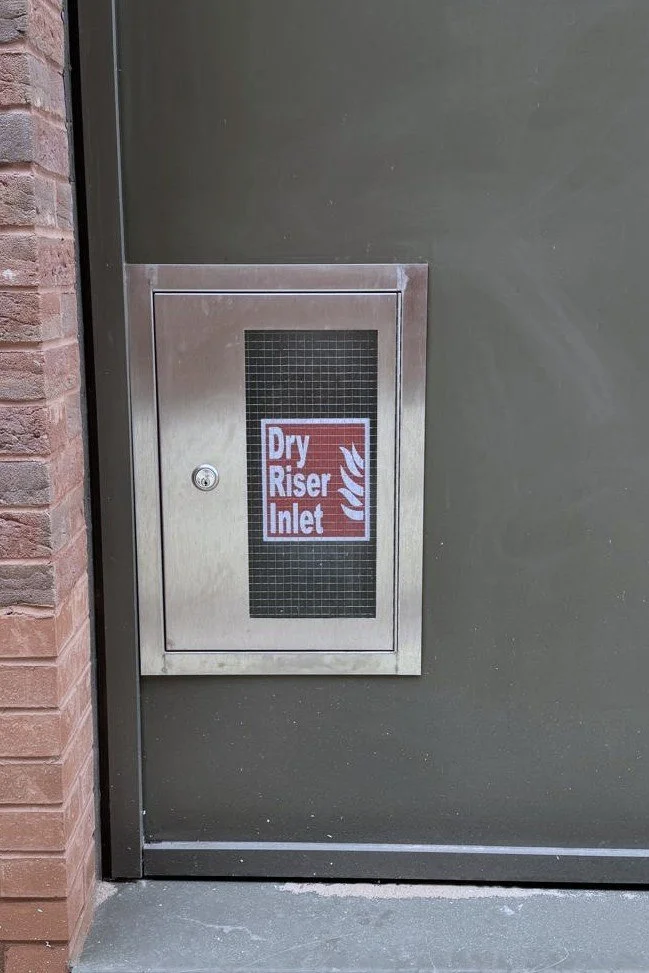
Stainless Steel Vertical Inlet Cabinet for Dry Riser Systems