
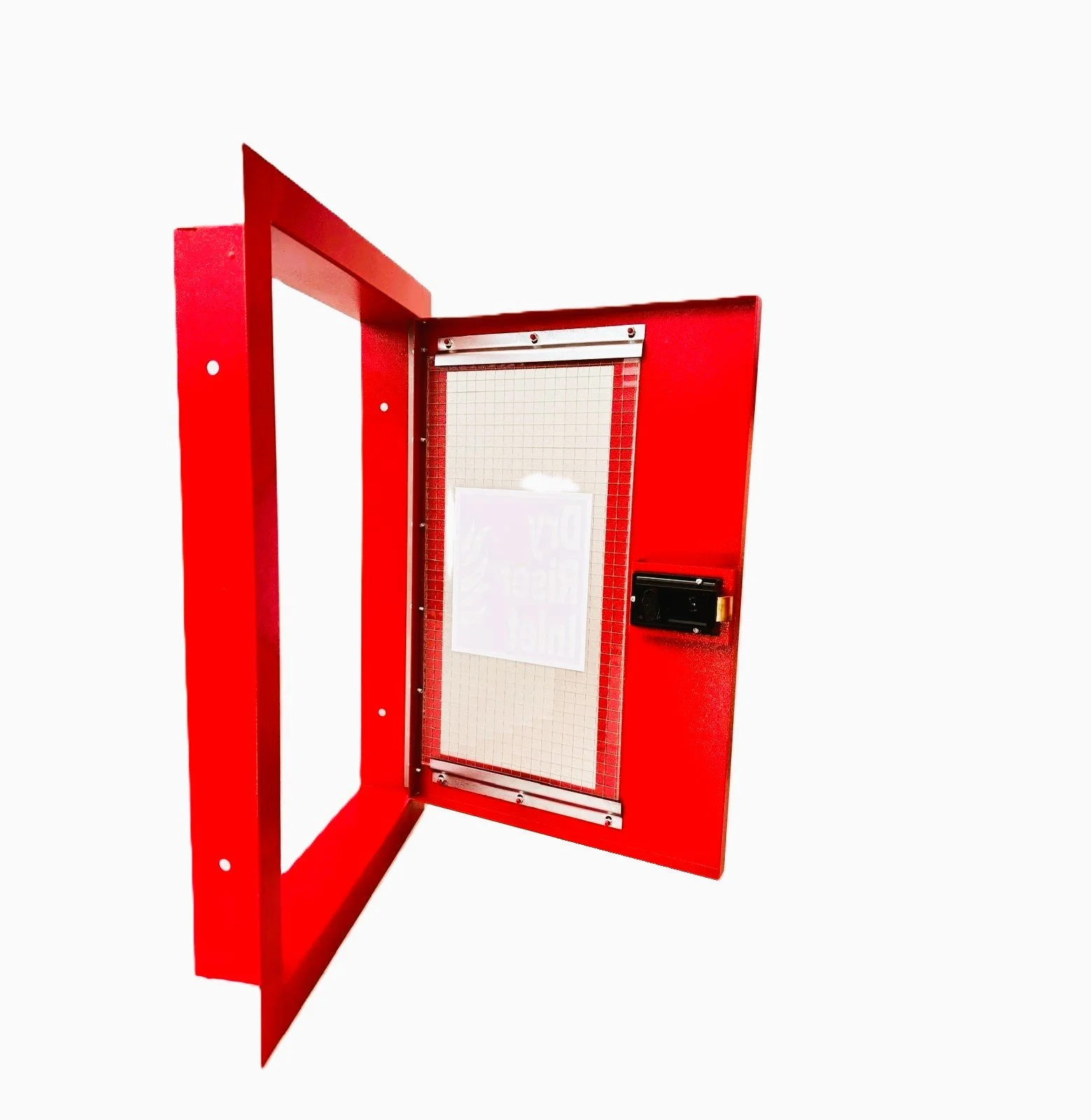
Dry Riser Vertical Inlet Recessed Architrave and Door
Cabinet Specifications
Product Type: Vertical inlet architrave and door cabinet
Application: 2-way dry riser inlet breeching valve
Finish: Red RAL 3002
Surrounding Flange / Architrave: 38mm wide all round
Glass: 6mm Georgian wired glass
Lock: Slam shut lock, keyed alike
Hinge: Stainless steel piano hinge
Standards: Designed and manufactured in accordance with BS5041 Part 5
Dimensions: 595mm high x 395mm wide x 80mm deep
Approx. Weight: 10kg
Cabinet includes a wired Georgian glass door, slam shut lock, and stainless steel piano hinge.
Product Use and Protection
The recessed vertical dry riser inlet cabinet is designed to house and protect a 2-way inlet breeching valve. It helps keep the inlet point accessible, visible, and protected for emergency fire service use. Dry riser inlet cabinets protect important fire-fighting connection points from accidental damage, tampering or unauthorised access, dirt, dust, and debris. This cabinet is particularly suitable where a flush or semi-flush appearance is required, as the architrave and door sit neatly around the wall opening.
UK Regulations and Standards for Dry Riser Inlet Cabinets
In the UK, dry riser systems are subject to strict fire safety requirements. These systems must be correctly installed, accessible, inspected, and maintained to help ensure they are ready for use in an emergency.
The Law: The Regulatory Reform (Fire Safety) Order 2005 makes the building’s “Responsible Person” legally accountable for maintaining fire safety systems.
Building Regulations: Approved Document B requires dry risers in buildings where the top floor is between 18m and 50m from ground level. Buildings over 50m generally require wet risers.
Product Standard: This cabinet is designed and manufactured in accordance with BS5041 Part 5, as stated on the attached Rapidrop data sheet.
Inlet Positioning: The inlet cabinet and breeching inlet should be positioned as close as possible to the rising main to reduce pressure loss. It should also be within easy reach of the attending fire appliance, visible to fire crews, and no more than 18 metres from the nearest vehicular access.
Signage: Dry riser inlet cabinets should be clearly identifiable and marked as “DRY RISER INLET.”
Installation Guidance
The vertical inlet architrave and door cabinet should be recessed into a suitable wall opening and installed so the architrave sits neatly around the aperture.
The cabinet should be positioned to provide clear and unobstructed access to the dry riser inlet breeching valve. It should not be hidden behind landscaping, parked vehicles, storage, signage, or other obstructions.
The cabinet and breeching inlet should be located close to the rising main to reduce pressure loss and allow efficient operation during Fire Brigade use.
For outdoor applications, the manufacturer recommends stainless steel cabinets. Therefore, the red RAL 3002 version should be used in suitable internal or protected locations unless otherwise confirmed as suitable by the manufacturer.
Where installed through or near a fire-rated wall, any gaps around the cabinet or pipe penetrations should be sealed with suitable fire-stopping materials to maintain the fire integrity of the wall or compartment.
Maintenance Requirements
The dry riser system, including the inlet cabinet and breeching valve, should be maintained by a competent person.
Six-Monthly Visual Inspection: The cabinet, lock, hinge, glass, signage, inlet valve, and surrounding area should be checked every 6 months. The inspection should look for damage, corrosion, obstruction, tampering, debris, missing signage, or leaks.
Annual Wet Pressure Test: Once every 12 months, the dry riser system should be filled with water and pressure tested to confirm it is watertight and capable of withstanding operational pressures.
A full logbook should be kept for all inspections, tests, repairs, and remedial works.
Important Note
This product contains glass with sharp edges. Please handle with care.
Please check all products before signing for the materials. We cannot be held responsible for goods after they have been signed for.
Due to the specialist nature of dry riser cabinets, these products may not always be available on a standard next working day service. Lead time will be advised where applicable.
Delivery to mainland UK only
Cabinet Specifications
Product Type: Vertical inlet architrave and door cabinet
Application: 2-way dry riser inlet breeching valve
Finish: Red RAL 3002
Surrounding Flange / Architrave: 38mm wide all round
Glass: 6mm Georgian wired glass
Lock: Slam shut lock, keyed alike
Hinge: Stainless steel piano hinge
Standards: Designed and manufactured in accordance with BS5041 Part 5
Dimensions: 595mm high x 395mm wide x 80mm deep
Approx. Weight: 10kg
Cabinet includes a wired Georgian glass door, slam shut lock, and stainless steel piano hinge.
Product Use and Protection
The recessed vertical dry riser inlet cabinet is designed to house and protect a 2-way inlet breeching valve. It helps keep the inlet point accessible, visible, and protected for emergency fire service use. Dry riser inlet cabinets protect important fire-fighting connection points from accidental damage, tampering or unauthorised access, dirt, dust, and debris. This cabinet is particularly suitable where a flush or semi-flush appearance is required, as the architrave and door sit neatly around the wall opening.
UK Regulations and Standards for Dry Riser Inlet Cabinets
In the UK, dry riser systems are subject to strict fire safety requirements. These systems must be correctly installed, accessible, inspected, and maintained to help ensure they are ready for use in an emergency.
The Law: The Regulatory Reform (Fire Safety) Order 2005 makes the building’s “Responsible Person” legally accountable for maintaining fire safety systems.
Building Regulations: Approved Document B requires dry risers in buildings where the top floor is between 18m and 50m from ground level. Buildings over 50m generally require wet risers.
Product Standard: This cabinet is designed and manufactured in accordance with BS5041 Part 5, as stated on the attached Rapidrop data sheet.
Inlet Positioning: The inlet cabinet and breeching inlet should be positioned as close as possible to the rising main to reduce pressure loss. It should also be within easy reach of the attending fire appliance, visible to fire crews, and no more than 18 metres from the nearest vehicular access.
Signage: Dry riser inlet cabinets should be clearly identifiable and marked as “DRY RISER INLET.”
Installation Guidance
The vertical inlet architrave and door cabinet should be recessed into a suitable wall opening and installed so the architrave sits neatly around the aperture.
The cabinet should be positioned to provide clear and unobstructed access to the dry riser inlet breeching valve. It should not be hidden behind landscaping, parked vehicles, storage, signage, or other obstructions.
The cabinet and breeching inlet should be located close to the rising main to reduce pressure loss and allow efficient operation during Fire Brigade use.
For outdoor applications, the manufacturer recommends stainless steel cabinets. Therefore, the red RAL 3002 version should be used in suitable internal or protected locations unless otherwise confirmed as suitable by the manufacturer.
Where installed through or near a fire-rated wall, any gaps around the cabinet or pipe penetrations should be sealed with suitable fire-stopping materials to maintain the fire integrity of the wall or compartment.
Maintenance Requirements
The dry riser system, including the inlet cabinet and breeching valve, should be maintained by a competent person.
Six-Monthly Visual Inspection: The cabinet, lock, hinge, glass, signage, inlet valve, and surrounding area should be checked every 6 months. The inspection should look for damage, corrosion, obstruction, tampering, debris, missing signage, or leaks.
Annual Wet Pressure Test: Once every 12 months, the dry riser system should be filled with water and pressure tested to confirm it is watertight and capable of withstanding operational pressures.
A full logbook should be kept for all inspections, tests, repairs, and remedial works.
Important Note
This product contains glass with sharp edges. Please handle with care.
Please check all products before signing for the materials. We cannot be held responsible for goods after they have been signed for.
Due to the specialist nature of dry riser cabinets, these products may not always be available on a standard next working day service. Lead time will be advised where applicable.
Delivery to mainland UK only