
Underground Dry Riser Installation UK: BS 9990:2015
Underground Dry Riser Installations
Underground dry riser installations can be seen with a below-ground inlet arrangement (breeching inlet set in a lockable chamber with a flush cover). It is used where an above-ground inlet cabinet is vulnerable to vandalism, clashes with façade design, or cannot be placed in a safe, obvious position, such as the entrance of a narrow driveway where clashes with vehicles can occur. The use of underground systems requires approval from the local fire authority.
Installation Depth & System Details
Underground dry riser systems should be installed by laying the pipework in a trench, ideally wrapped in anti corrosion tape, at a depth of around 500–600mm. Despite being a dry system, this positioning keeps the system safely below the frost line, ensuring long-term protection and reliability.
Systems should include 100mm dry riser galvanised steel pipe offering extra protection to the elements below ground. Also included are pipe supports, air release valves for smooth operation, and 25mm drain valves at the lowest points, connected through access chambers for maintenance purposes. The pipe work should have a slight fall to the drain valve to allow system to be gravity drained.
A 2-way breeching inlet connection should be fitted within an inlet cabinet, with bottom edge set 400–600mm above ground level for fast access during emergencies, or in the ground with a floor-mounted inlet cabinet. Landing valves should also be positioned within cabinets, keeping them accessible while protected.
Frost protection and drainage: drainage is not optional - operational guidance describes drain and air valves to facilitate system drain down after use.
Anti corrosion tape can be used for extra protection against corrosion.
Compliance & Standards
Every dry riser installation is carried out with a precise booking schedule and strict H&S procedures, so projects are completed on time and in full compliance with BS9990:2015 standards.
BS 9990:2015 does not specifically approve the use of underground inlet chambers and systems, the underground detail is not a typical design and you should seek approval from Building Control and your local Fire & Rescue Service.
Health & Safety Considerations
When carrying out groundworks for dry riser installations one of the main H&S hazards is if the trench is left open for too long. The underground dry riser installation should be scheduled in line with groundworks so the site team can backfill the trench as soon as possible once the dry riser system has been installed and commissioned.
It is the responsibility of the property owner or site team carrying out the works to ensure they’ve complied with the relevant legislation and Health and Safety Executive (HSE) guidance.
Other hazards when carrying out groundworks include clashes with gas services, electrical cables and existing water mains.
Step-by-Step Installation Overview and Best Practices
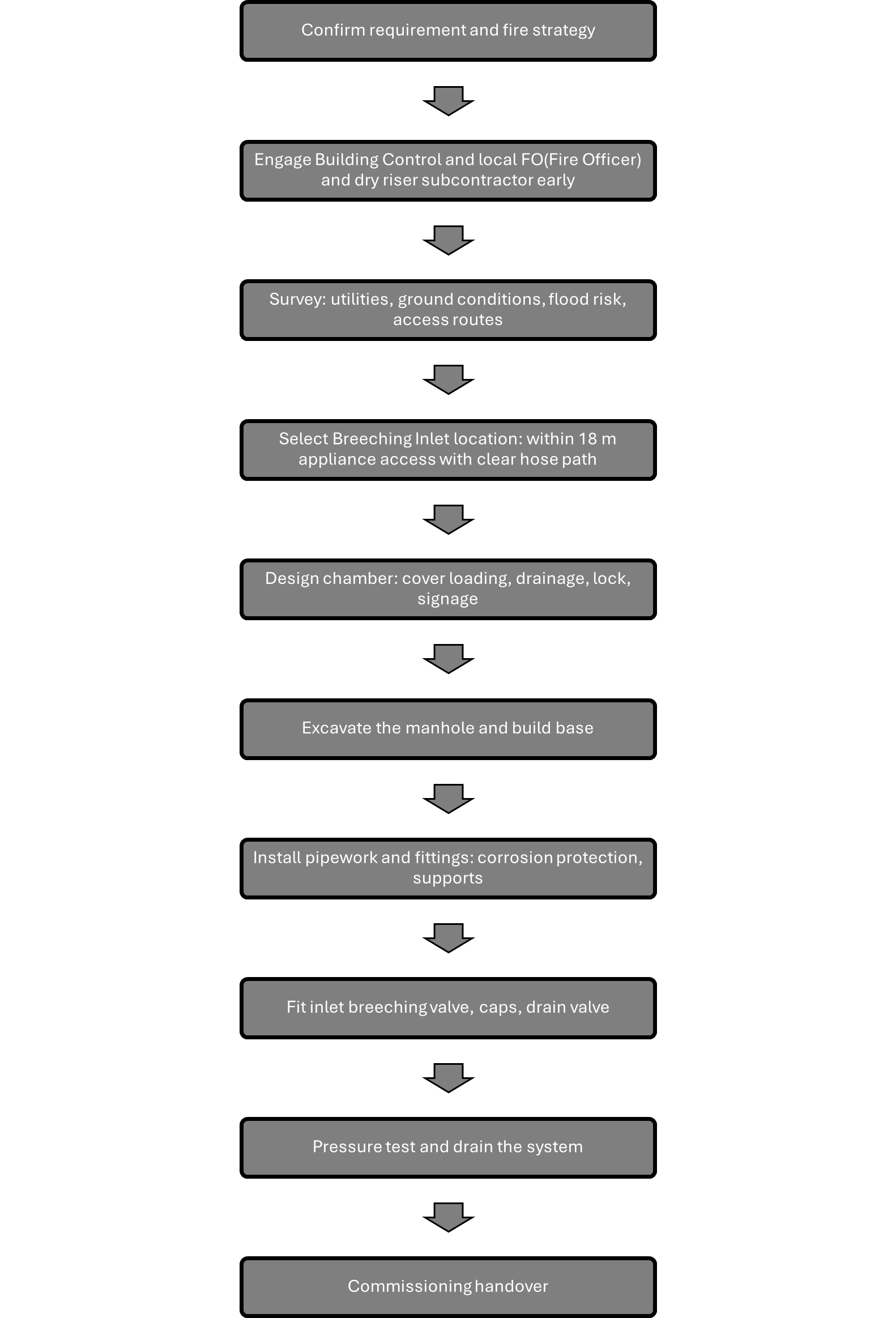
A best-practice underground dry riser installation sequence focuses on maintaining compliance as per BS 9990:2015.
Confirm requirement and fire strategy
Engage Building Control and local FO (Fire Officer) and dry riser subcontractor
Survey: utilities, ground conditions, flood risk, access routes etc.
Select breeching inlet location: within 18 metres of fire appliance with clear hose path
Design chamber: cover loading, drainage, lock, signage
Excavate the trench for the dry riser installation
Install pipework and fittings, corrosion protection (if required) and supports
Fit inlet breeching valve, caps, drain valve and outlet valve/s
Pressure test and drain the system
Commissioning handover
Backfill trench
Underground Inlet Cabinets
Off-the-shelf option to suit a breeching inlet positioned below ground is the Floor Mounted Inlet Cabinet. This is designed to suit standard underground chamber sizes and is ideal for commonly used underground installations. The back box is made from durable zinc-coated steel and finished with a polyester powder coating, helping to protect it against corrosion. It includes a sturdy 5 mm galvanised steel architrave that provides both strength and a neat, clean finish. The door is manufactured from 5 mm galvanised chequered plate and comes complete with clearly engraved “Dry Riser Inlet”, filled in black for good visibility.
Please note none of the underground cabinets conform to BS 5041 Part 5; this will require approval from the local fire authority and building control.
Dimensions 595mm wide x 395mm wide x 400mm deep.

Floor Mounted Inlet Cabinet
Testing, Commissioning, Maintenance and Inspection
BS9990:2015 standard provides guidance on testing and commissioning. A dry riser system is charged with water to its design operating pressure at the inlet for a period of at least 15 minutes to 12 bar of pressure and engineers will check for any leaks while on test. During a commission, this should be rectified immediately or reported to the relevant person when carrying out a 12-month pressure test. Following a 12-month pressure test, the dry riser should be repaired and the system retested. It also states that dry risers should be checked every six months to ensure the system and valves are in good working condition.
Maintenance records should include dates of inspections/tests, defects found, actions taken, confirmation of drain down, and any notifications made to the local fire and rescue service where required (particularly for high rise residential equipment faults in UK).
Click the remedials link to view the full guide about dry riser remedials.
Common Pitfalls
The most common failure for underground Dry Riser Inlets is when the Fire Brigade arrives and the inlet is difficult to find, hard to open, flooded, or obstructed. Chamber flooding is usually caused by missing or inadequate drainage, poor cover sealing, or high groundwater.
An underground cover can disappear visually in paving patterns. Approved Document B is strict on visibility from the appliance parking position, highlighting why signage is important.
Access shouldn’t be compromised, and 18 meters should be always considered.
Where underground installation is required, specialist design and compliance measures must be followed.
Sources: