
Dry Riser Installations at Height
Safety, Access, and Best Practice on Site
Installing a dry riser system is one of the most important stages in ensuring a building’s fire safety readiness. Dry risers provide firefighters with a direct means of delivering water to upper floors during an emergency, making them a critical part of any multi-storey development. However, proper installation is not just about compliance, it is also about safety, precision, and responsible site management.
All work at height must be carried out in accordance with the Work at Height Regulations 2005 and BS 9990:2015 standard, ensuring both safety and compliance on site.
Safe Access
At every stage of the installation process, safe access and working practices are essential. Many dry riser installations require work at height, which is why MEWPs (Mobile Elevating Work Platforms) including cherry pickers, scissor lifts, and boom lifts are commonly used. The selection and operation of these platforms must always be carried out with care, valid IPAF certificationa and in accordance with site safety standards.
MEWP (Mobile Elevating Work Platforms)
It’s vital to ensure that the MEWP chosen is suitable for the job. The platform must be able to reach the required work area without the need for installers to stretch or lean beyond the safety barrier. Overreaching is a leading cause of falls and accidents, and it can be completely avoided with proper planning. The MEWP must also be supplied by a competent and certified company, and only trained and authorised operatives should be permitted to use it. The site foreman has a key responsibility to verify that all users are appropriately qualified before work begins.
Before any MEWP is deployed, the surrounding area must be thoroughly checked to ensure it is free from overhead obstructions such as power lines, cables, steel girders, or tree branches. These hazards can cause serious injury or damage to both personnel and equipment. The ground conditions must also be assessed carefully - it should be level and capable of supporting the full weight of the machine and its load. Uneven or unstable surfaces increase the risk of tipping and can compromise both safety and the quality of the dry riser installation.
Where other site activities are taking place nearby, barriers should be installed around the work area to prevent contact between personnel and the MEWP. This simple precaution reduces the risk of collisions, distractions, and accidental interference with equipment.
By combining good planning with safe working practices, dry riser installations can be completed efficiently and safely. Using the right MEWP, operated by trained staff and supervised by competent site managers, ensures that all work is carried out to the highest professional and safety standards.
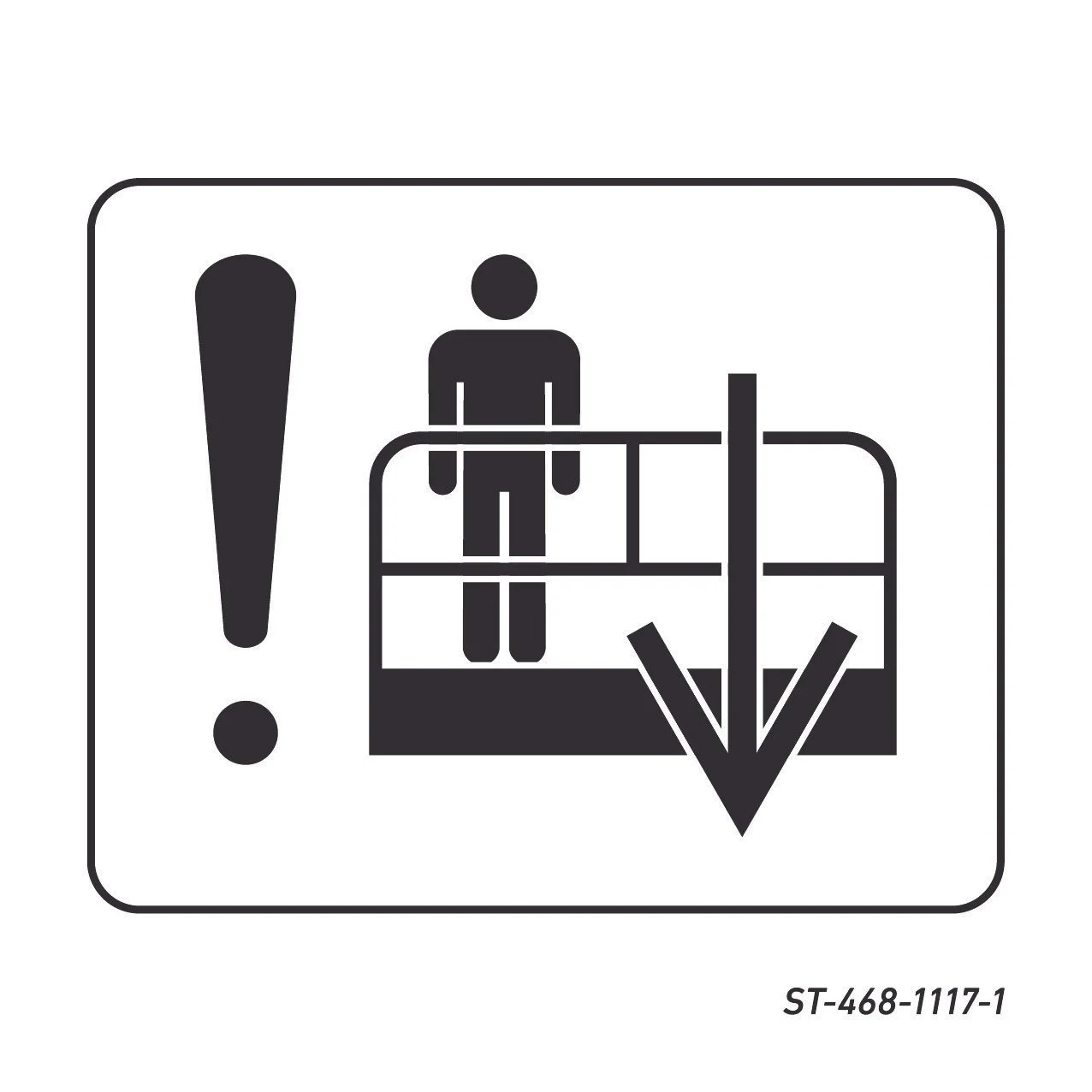
IPAF - Update global Emergency Lowering Sticker
The International Powered Access Federation (IPAF) has confirmed it has updated one of its most widely used global safety stickers for use on Mobile Elevating Work Platforms (MEWPs). Design applied to machines to indicate where the auxiliary ground controls are in case of emergency.
Ladders
Ladders shall only be used as a last resort for gaining access to work areas and must not be used as working platforms. Ladders must be of appropriate strength, in good condition and suitable for the purpose intended, and only EN131 industrial-class ladders shall be used on site. Ladders shall be erected on a firm, level surface and positioned to avoid creating hazards or the risk of being struck or dislodged. They must be secured at the top to prevent slipping, swaying or displacement, or footed if securing is not possible. Ladders shall be placed at the correct angle of one metre out for every four metres in height and must not be positioned against fragile surfaces or edges. The area around the ladder shall be kept clear. Operatives climbing or descending must keep both hands free to grip the ladder and always maintain three points of contact.
Step Ladders
Step ladders shall only be used for short-duration, low-risk tasks as identified through a risk assessment. Only EN131 industrial-class step ladders shall be used on site. Step ladders must be suitable for the intended task, remain in good condition, and be inspected for faults prior to use and at regular intervals. The working area around the step ladder shall be kept clear, and the ladder must be placed on firm, level ground away from potential impact.
The legs of the ladder must be fully spread so that all four feet are stable and in contact with the ground and retaining cords or hinges shall be of equal length and in good condition. Where possible, step ladders should be positioned at right angles to the task. The top tread shall not be used as a working platform unless specifically designed as such and fitted with a secure handhold.
Podiums
Where safer and more practical, podiums shall take precedence over steps, ladders and hop-ups in dry riser installations, servicing and maintenance. The need to use podiums shall be established through risk assessment. Podiums must be positioned on firm, level ground, and safe working limits shall be clearly marked and adhered to. Operatives must receive suitable instruction in the safe use of podiums, and all manufacturer’s guidelines shall be followed during erection, use and dismantling. Manual handling of podiums must follow safe lifting practices.
Best Practice on Site
Dry riser systems are a legal requirement under UK fire safety regulations for most multi-storey buildings, but their safe and proper installation is just as critical as their design. Partnering with experienced fire protection specialists helps ensure compliance with BS 9990:2015 and provides peace of mind that the system will perform as intended when it matters most.
For expert advice on dry riser installation, testing, and maintenance, or to arrange a site consultation, contact our team today. We work with contractors, developers, and building managers nationwide to deliver fully certified fire safety systems that meet British Standards and exceed expectations.